How Liquidation Cascades Shape Crypto Market Movements in 2026 (Pro-Level Analysis)
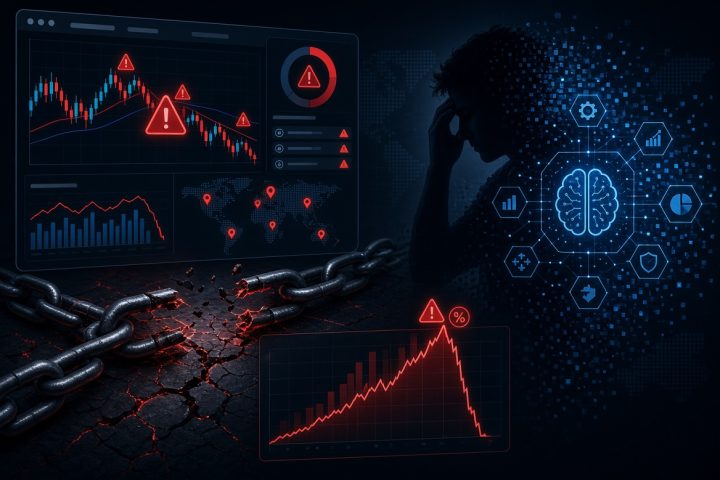
Liquidation cascades are one of the most powerful forces in crypto markets. In 2026, with deeper leverage, faster matching engines, and more aggressive algorithmic trading, liquidation cascades have become a dominant driver of price movement. Understanding how they form — and how to trade around them — is essential for every serious futures trader.
Introduction: Why liquidation cascades matter
A liquidation cascade occurs when a series of forced liquidations trigger more liquidations, creating a chain reaction. Exchanges like
Binance Futures,
Bybit,
and
OKX
confirm that most extreme price moves are caused not by organic buying or selling — but by forced liquidations.
These cascades can move the market 3–15% in minutes.
1. What triggers a liquidation cascade?
Liquidation cascades begin when a large cluster of leveraged positions hits their liquidation price. This triggers forced market orders from the exchange’s liquidation engine.
According to
Deribit,
the main triggers include:
- High leverage positions (20x–100x)
- Thin liquidity during volatility
- Whale-driven price pushes
- Funding rate imbalances
- OI (Open Interest) spikes
When these factors align, the market becomes extremely unstable.
2. How liquidation engines work on major exchanges
Each exchange has its own liquidation engine. For example:
- Binance Futures uses an auto-deleveraging (ADL) system
- Bybit uses partial liquidation to reduce cascade risk
- OKX uses a multi-tiered margin system
- Bitget uses smart risk control to slow down cascades
But regardless of the system, forced liquidations always create aggressive market orders — which accelerate price movement.
3. The role of Open Interest (OI) in predicting cascades
OI is one of the strongest predictors of liquidation cascades. Exchanges like
Binance
and
Bybit
publish real-time OI charts.
Warning signs include:
- OI rising rapidly while price moves slowly
- OI rising during consolidation (dangerous)
- OI dropping sharply (cascade already started)
- OI + Funding Rate both extreme
When OI is high, the market becomes extremely sensitive to sudden moves.
4. Funding rates and their impact on cascades
Funding rates show which side of the market is overcrowded. Exchanges like
OKX
and
Bybit Funding
provide real-time funding data.
Extreme funding rates often precede liquidation cascades:
- High positive funding → long squeeze risk
- High negative funding → short squeeze risk
5. Whale-driven manipulation and liquidity hunts
Whales often push price toward liquidation clusters. Exchanges like
Kraken
and
Binance
warn traders about sudden liquidity removal during volatility.
Whale strategies include:
- Stop hunts
- Liquidity grabs
- Spoofing order books
- Triggering liquidation zones intentionally
6. How to trade safely during liquidation cascades
Professional traders follow strict rules:
- Use low leverage (2–5x)
- Avoid entering during the first minutes of a cascade
- Wait for OI to drop before entering
- Use limit orders to avoid slippage
- Trade only on exchanges with strong engines
7. How 99ta100 helps traders avoid liquidation traps
99ta100 integrates multiple layers of protection:
- Real-time OI monitoring
- Funding rate analysis
- Liquidation heatmap detection
- AI-based volatility scoring
- Slippage protection algorithms
These tools help traders avoid entering positions right before a cascade.
Conclusion: Liquidation cascades are the real market movers
In 2026, liquidation cascades shape most major price movements. By understanding OI, funding, whale behavior, and exchange liquidation engines, traders can avoid dangerous zones and capitalize on volatility safely.
Start with the Demo or choose your plan today.