Crypto Trading Roadmap 2027: From Complete Beginner to Consistent Trader
The cryptocurrency market has created more opportunities than ever before. Millions of people around the world are entering crypto hoping to build wealth, generate income, or achieve financial independence through trading.
For many beginners, trading looks simple. They watch a few videos, open an exchange account, and believe they are ready to compete against professional traders, institutions, algorithms, and experienced market participants.
Unfortunately, reality is very different.
Most crypto traders do not fail because they lack intelligence. They fail because they approach trading without a structured framework, clear risk management rules, or a repeatable decision-making process.
The purpose of this guide is to show you what separates profitable traders from unprofitable traders and how you can build a professional-level approach to the market.
Why So Many Crypto Traders Fail
Every day thousands of traders enter the market expecting fast profits. Many are attracted by screenshots showing large gains, social media success stories, or unrealistic promises from influencers.
What these traders rarely see are the months or years of losses, mistakes, emotional decisions, and hard lessons that often happen behind the scenes.
One of the biggest reasons traders fail is because they focus almost entirely on finding perfect entries.
They spend hours searching for the best indicator, the best strategy, or the best signal group.
Meanwhile, they completely ignore the factors that actually determine long-term survival:
- Risk management
- Position sizing
- Trading psychology
- Market structure
- Discipline
- Consistency
Many beginners can achieve winning trades.
The difficult part is repeating that success month after month while protecting capital during difficult market conditions.
The Difference Between Gambling And Trading
A surprising number of market participants are not actually trading.
They are gambling.
The difference is simple.
A gambler enters the market hoping to make money.
A trader enters the market following a predefined plan.
Gamblers increase risk after losses.
Professional traders reduce risk when conditions become unfavorable.
Gamblers rely on emotions.
Professional traders rely on systems.
Gamblers focus on today’s profit.
Professional traders focus on surviving for years.
This mindset difference is often the single factor that separates long-term winners from long-term losers.
Why Information Alone Is Not Enough
Modern traders have unlimited access to information.
YouTube contains thousands of courses.
Social media contains millions of opinions.
Trading communities share indicators, setups, and market predictions every day.
Yet most traders still lose money.
Why?
Because information and execution are not the same thing.
Knowing what RSI does does not make someone profitable.
Knowing how moving averages work does not create consistency.
Information becomes valuable only when it is organized into a complete trading process.
This process should clearly define:
- When to trade
- When not to trade
- How much to risk
- How to identify opportunities
- How to manage positions
- How to evaluate results
Without these rules, every trade becomes an emotional decision.
The Importance Of Market Structure
Before entering any position, traders must understand market structure.
Market structure helps explain who is currently in control and where price may be heading next.
Instead of focusing only on indicators, professional traders study:
- Trends
- Support zones
- Resistance zones
- Liquidity areas
- Momentum
- Volume behavior
This broader perspective often provides significantly more useful information than a simple buy or sell signal.
If you would like to see an example of a market analysis dashboard, you can explore the
99TA100 Trading Dashboard Demo.
The First Goal Is Not Profit
This statement surprises many beginners.
Your first goal as a trader should not be maximizing profits.
Your first goal should be survival.
A trader who protects capital always has another opportunity tomorrow.
A trader who loses everything is forced out of the game.
This is why successful traders think differently.
They understand that staying in the market long enough is often more important than winning any individual trade.
The traders who survive eventually gain enough experience to improve.
The traders who chase quick profits often disappear before reaching that stage.
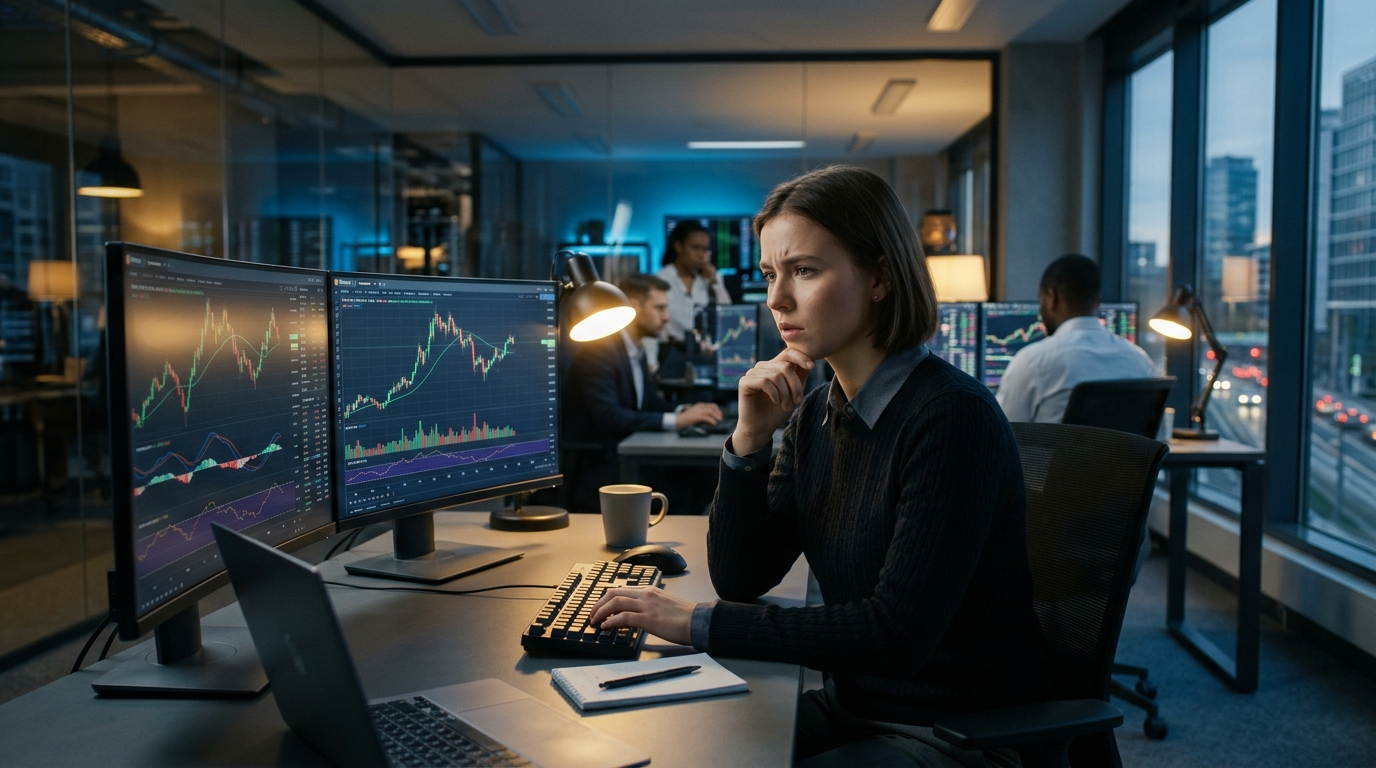
Trading Psychology: The Invisible Skill That Separates Winners From Losers
Most traders believe that profitability comes from finding better indicators, more accurate signals, or secret strategies that few people know about.
However, after spending enough time in the markets, many eventually discover a surprising truth:
Trading psychology often matters more than technical analysis.
Two traders can use exactly the same strategy, exactly the same charts, and exactly the same market conditions.
One becomes profitable.
The other continuously loses.
The difference is rarely the strategy itself.
The difference is usually emotional control, discipline, patience, consistency, and the ability to follow a predefined plan.
Markets are designed to test emotions.
Fear appears when prices fall.
Greed appears when prices rise.
Uncertainty appears during consolidation.
Excitement appears during breakouts.
Professional traders understand that mastering emotions is one of the most valuable skills they will ever develop.
Fear And Greed: The Two Most Powerful Market Forces
Financial markets are driven by human behavior.
Although charts appear technical and mathematical, every candle represents decisions made by millions of participants around the world.
Fear and greed constantly influence these decisions.
When Bitcoin rises rapidly, many traders suddenly become extremely optimistic.
They believe prices will continue climbing forever.
This often causes late entries near local tops.
When Bitcoin falls aggressively, the opposite occurs.
Fear becomes dominant.
Traders begin selling positions near local lows because they are afraid of further losses.
Ironically, these emotional reactions frequently happen at the worst possible moments.
Successful traders understand this cycle.
Instead of reacting emotionally, they attempt to follow objective rules and predefined criteria.
What Is FOMO And Why Does It Destroy Trading Accounts?
FOMO stands for Fear Of Missing Out.
It is one of the most common reasons crypto traders lose money.
Imagine watching a coin rise 20%, 30%, or even 50% within a short period.
Every social media account seems bullish.
Everyone is posting profits.
Charts look unstoppable.
At this moment many traders stop thinking logically.
Instead of waiting for confirmation, they enter immediately because they fear missing the opportunity.
Unfortunately, emotional entries often occur at poor risk-to-reward locations.
The market does not care about emotions.
The market rewards discipline.
The trader who patiently waits for high-quality opportunities usually performs better than the trader who constantly chases momentum.
Revenge Trading: A Silent Account Killer
After experiencing losses, many beginners try to recover money immediately.
This behavior is known as revenge trading.
Instead of following their normal process, traders increase position sizes, lower standards, and force unnecessary trades.
The goal is emotional recovery rather than rational decision-making.
This often leads to even larger losses.
Professional traders understand that losses are part of the business.
Every profitable trader experiences losing trades.
The objective is not perfection.
The objective is maintaining discipline while managing risk effectively.
Why Consistency Is More Important Than Accuracy
Many beginners search for strategies with extremely high win rates.
However, long-term profitability does not require winning every trade.
In fact, many professional systems remain profitable despite losing a significant percentage of trades.
The reason is risk management.
If average winners are larger than average losers, profitability can remain positive even when multiple trades fail.
Consistency comes from following the same process repeatedly.
Professional traders focus on execution quality rather than short-term outcomes.
Understanding Risk Management
Risk management is the foundation of professional trading.
Without proper risk control, even excellent market analysis can eventually fail.
The first responsibility of a trader is preserving capital.
Capital creates opportunity.
Without capital there can be no future trades.
This is why experienced traders spend far more time thinking about risk than potential profits.
Before entering any position, they ask:
- How much am I willing to lose?
- Does this trade justify the risk?
- Where is my invalidation point?
- What is the expected reward?
- Does this setup match my trading plan?
Only after these questions are answered do they consider entering the market.
The 1% Risk Principle
One common concept among professional traders is limiting risk on individual positions.
Rather than risking large portions of their account, they focus on preserving long-term survivability.
For example, losing 50% of an account requires a 100% gain to recover.
This simple mathematical reality explains why capital preservation
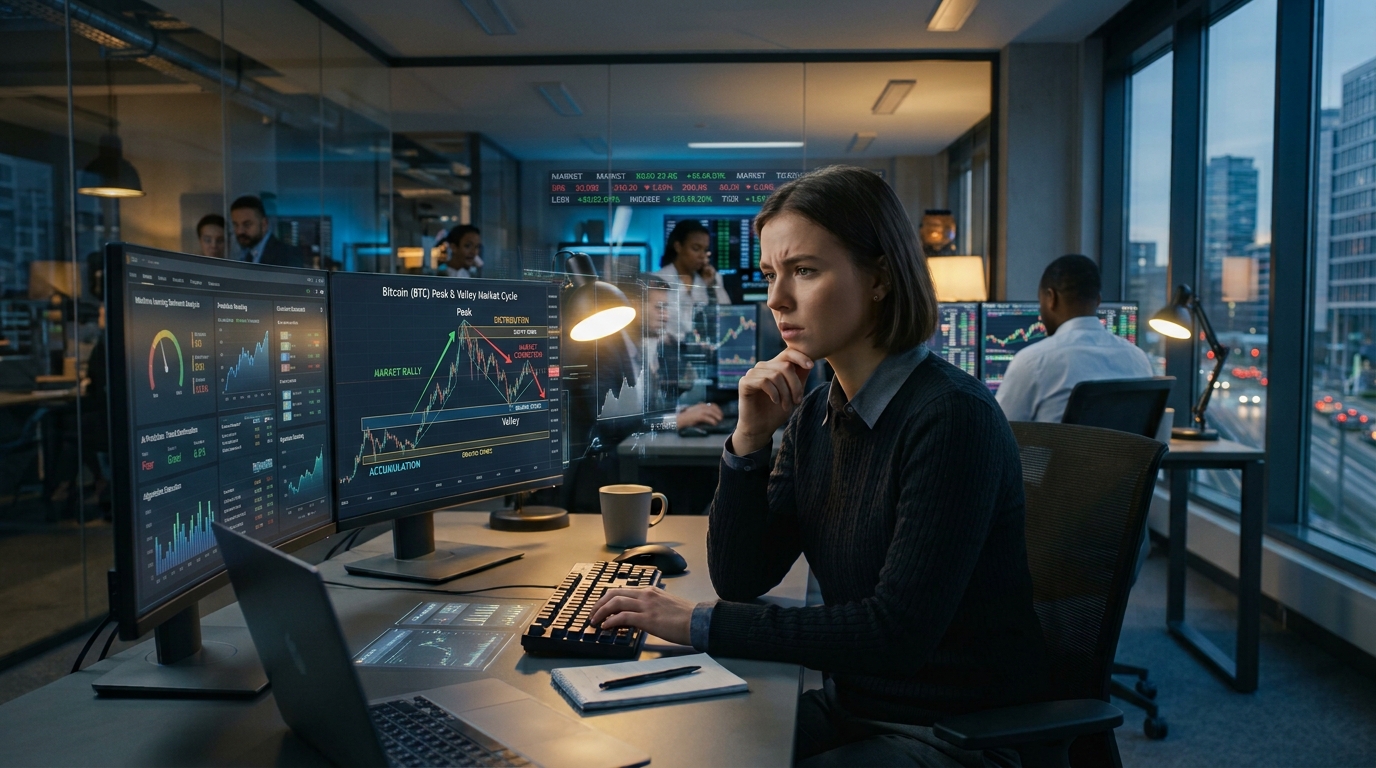
The Peak & Valley Trading Framework: Learning to Trade With Structure Instead of Emotion
After understanding trading psychology and risk management, the next challenge is identifying high-quality opportunities within the market.
This is where many traders struggle.
They know they should follow a plan, but they still do not know when a market is presenting a favorable opportunity and when it should be avoided.
Many traders continuously buy near local tops because excitement is high.
Others sell near market bottoms because fear dominates their decision-making.
The problem is not intelligence.
The problem is the inability to recognize where the market currently sits within its broader cycle.
This is one of the key principles behind the Peak & Valley approach.
Why Market Cycles Matter
Financial markets do not move in straight lines forever.
Instead, markets move through repeating phases.
- Accumulation
- Expansion
- Distribution
- Correction
Most inexperienced traders focus only on price movement.
Professional traders pay attention to context.
A 5% move means something completely different during an accumulation phase compared to a distribution phase.
Without understanding context, traders often make decisions using incomplete information.
The Peak & Valley concept attempts to solve this problem by evaluating market conditions through a structured lens rather than reacting emotionally to every candle.
Understanding Market Peaks
A market peak does not necessarily mean the highest price in history.
Instead, it represents an area where risk often begins increasing while reward potential begins decreasing.
At peaks, traders frequently experience:
- Extreme optimism
- High excitement
- Aggressive buying pressure
- Fear of missing out
- Overconfidence
News headlines often become extremely bullish during these periods.
Social media becomes flooded with profit screenshots.
Many traders begin believing prices can only move higher.
Ironically, risk is often highest when confidence becomes excessive.
This does not mean every peak immediately leads to a reversal.
However, it does mean traders should become more selective and disciplined when evaluating risk.
Understanding Market Valleys
Market valleys represent the opposite side of the psychological cycle.
Fear dominates discussion.
News becomes negative.
Many traders become convinced that prices will continue falling indefinitely.
Strong opportunities often emerge when uncertainty is elevated and confidence disappears.
This does not mean blindly buying every market decline.
It means evaluating whether the market is approaching areas where probability and risk-to-reward characteristics become more attractive.
Professional traders understand that opportunities frequently appear when emotions become extreme.
The Problem With Signal Dependency
One of the biggest mistakes modern traders make is becoming dependent on external signals.
They constantly search for someone else to make decisions on their behalf.
The problem with this approach is simple.
Even if a signal provider generates quality analysis, the trader never develops independent skills.
As a result, confidence disappears the moment market conditions change.
Successful traders learn how to evaluate opportunities themselves.
They understand why they are entering.
They understand where risk exists.
They understand when conditions no longer support the trade.
Knowledge creates confidence.
Confidence creates discipline.
Discipline creates consistency.
How Technology Can Improve Decision Making
Modern traders have access to powerful analytical tools that were previously available only to institutions.
Dashboards, data aggregation systems, automated scanners, and artificial intelligence tools can help simplify decision making.
However, technology should support a strategy rather than replace one.
The best results often occur when traders combine structured analysis with modern technology.
The 99TA100 Trading Dashboard Demo demonstrates how analytical tools can be used to evaluate market conditions, identify opportunities, and organize decision-making more efficiently.
The Rise Of AI In Crypto Trading
Artificial intelligence is transforming financial markets.
AI systems can process enormous amounts of information far faster than individual traders.
This includes:
- Price action analysis
- Indicator evaluation
- Market sentiment monitoring
- Multi-timeframe analysis
- Pattern recognition
- Data aggregation
While AI does not eliminate risk, it can significantly improve efficiency and consistency when integrated correctly into a trading framework.
The future belongs to traders who understand how to combine human judgment with technological advantages.
Building A Personal Trading Framework
Every successful trader eventually develops a framework that aligns with their personality, goals, and risk tolerance.
A professional framework should clearly define:
- Market selection criteria
- Trade entry conditions
- Exit rules
- Risk management standards
- Position sizing guidelines
- Review procedures
Without structure, traders rely on emotions.
With structure, traders rely on evidence.
This difference often determines whether someone remains active in the market years from now.
Opportunities Beyond Traditional Trading
The cryptocurrency ecosystem is much larger than trading alone.
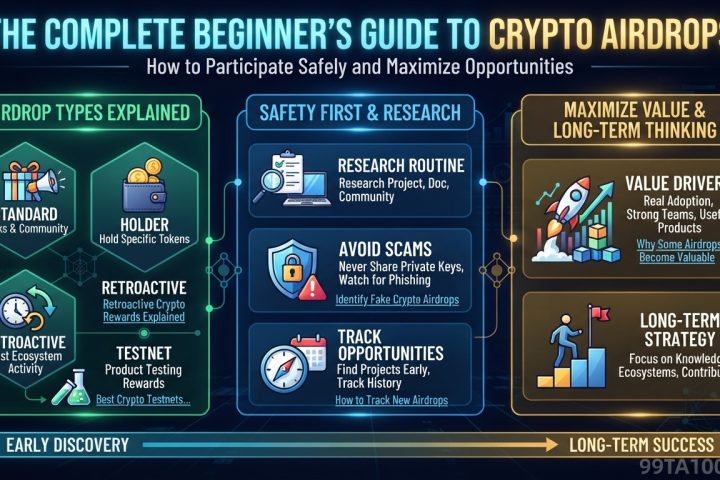
Many users create opportunities through education, ecosystem participation, blockchain research, Web3 development, and airdrop discovery.
If you are interested in exploring additional opportunities within the crypto space, you can visit our
Crypto Airdrop Center.
You may also find value in our research article:
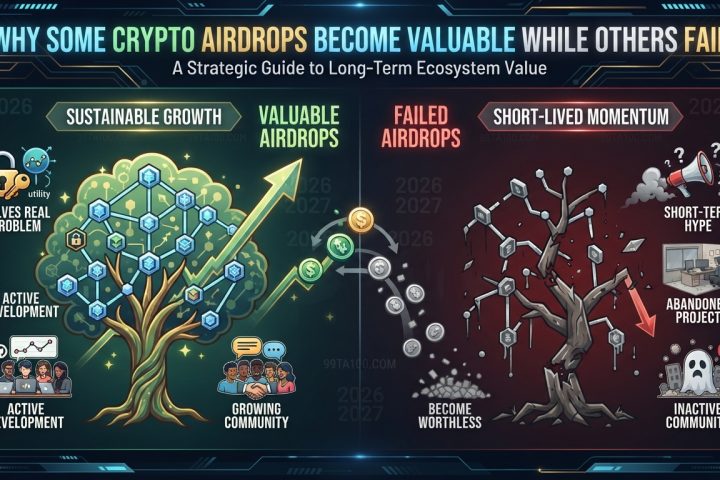
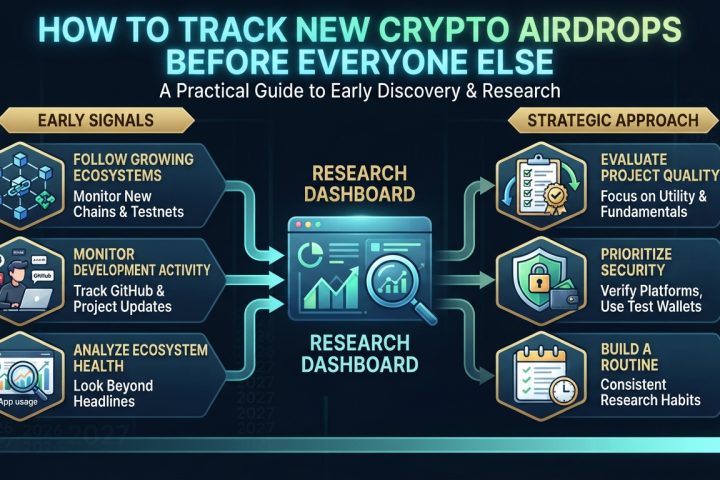
7 Overlooked Crypto Airdrops That Could Reward Early Users in 2026
Successful participants understand that knowledge and opportunity often extend far beyond simply buying and selling assets.
The Complete Crypto Trader Path 2026
Learning through trial and error can take years.
Unfortunately, many traders spend significant time and capital repeating mistakes that could have been avoided through structured education.
This is why systematic learning becomes valuable.
The
Complete Crypto Trader Path 2026 – Peak & Valley System + 99TA100 Bot + 15 Full Modules
was designed to provide traders with a structured roadmap rather than fragmented information.
Instead of jumping between random videos, disconnected strategies, and contradictory opinions, traders follow a logical progression focused on practical skill development.
The program covers:
- Market structure analysis
- Trading psychology
- Risk management principles
-
The Complete Crypto Trader Path 2026 The Harsh Reality: Most Traders Never Build a Real System
Take a moment and think about your trading journey.
How many indicators have you tested?
How many YouTube videos have you watched?
How many Telegram channels have you joined?
How many times have you changed your strategy after a few losing trades?
For most traders, the answer is simple:
Too many.
The average trader spends years searching for the perfect indicator while completely ignoring the need for a structured trading framework.
This is why many traders feel busy but never actually improve.
They collect information.
They collect signals.
They collect indicators.
But they never build a complete process.
The market does not reward information.
The market rewards execution.
Why Most Trading Courses Fail to Produce Better Traders
Many trading courses teach isolated concepts.
One module explains RSI.
Another explains support and resistance.
Another discusses candlestick patterns.
The problem is that trading is not a collection of independent concepts.
Trading is a decision-making process.
The question is never:
“Do you know what RSI is?”
The real question is:
“Can you combine psychology, risk management, market structure, timing, and execution into one repeatable framework?”
That is where the majority of traders struggle.
The Birth Of The Peak & Valley Concept
The Peak & Valley approach was developed around a simple observation.
Most traders buy when excitement is highest and sell when fear is strongest.
In other words, they frequently do the opposite of what disciplined professionals attempt to do.
The market continuously moves between periods of optimism and pessimism.
Price rises.
Confidence increases.
Greed expands.
Then reality returns.
Price falls.
Fear appears.
Panic spreads.
The Peak & Valley methodology was designed to help traders identify where opportunities may exist within these emotional cycles.
Instead of reacting emotionally, traders learn to evaluate probability, risk, and market context.
Trading Without Structure Is Expensive
Every losing trade costs money.
But random trading costs something even more valuable.
Time.
Many traders spend two, three, or even five years repeating the same mistakes.
Not because they are incapable.
But because nobody ever showed them how all the pieces fit together.
Imagine trying to build a house without a blueprint.
You might have the materials.
You might have the tools.
You might even work hard every day.
But without a clear structure, progress becomes slow, frustrating, and expensive.
Trading works exactly the same way.
The Difference Between Learning and Wandering
Many traders confuse activity with progress.
Watching random videos is not a learning system.
Following social media predictions is not a learning system.
Jumping between strategies every month is not a learning system.
A real trading education should guide you through a logical progression.
- Understanding market structure.
- Understanding psychology.
- Learning risk management.
- Developing execution discipline.
- Building consistency.
- Creating your personal trading framework.
This process is what turns beginners into independent decision-makers.
Introducing The Complete Crypto Trader Path 2026
The
Complete Crypto Trader Path 2026 – Peak & Valley System + 99TA100 Bot + 15 Full Modules
was created to solve the exact problem that most traders face:Information overload without a structured roadmap.
Instead of consuming random content from dozens of sources, traders follow a clear learning path designed to develop practical market skills.
The program combines multiple essential components into one educational framework.
- Market structure analysis.
- Peak & Valley methodology.
- Trading psychology.
- Risk management systems.
- Position sizing principles.
- Trade planning.
- Execution discipline.
- Long-term consistency building.
- Workflow optimization.
- AI-assisted trading tools.
What Makes This Different?
Most educational products focus only on entries.
Professional traders understand that entries are only one small part of the equation.
A profitable trading process includes:
- Market selection.
- Timing.
- Risk control.
- Position sizing.
- Execution.
- Review.
- Continuous improvement.
The goal is not simply finding trades.
The goal is creating a repeatable framework that remains effective over hundreds of trades.
Combining Education With Modern Technology
Today’s markets move faster than ever before.
Successful traders increasingly combine structured education with data-driven technology.
The
99TA100 Trading Dashboard
demonstrates how analytical tools can help simplify decision-making, organize market information, and support systematic trading workflows.Technology alone cannot create profitable traders.
However, technology combined with education can significantly accelerate the learning process.
Your Next Trading Decision Matters
One year from now, you will either

Your Next Trading Decision Matters Developing A Structured Trading Framework
As traders gain experience, a recurring pattern becomes apparent. Most long-term performance differences are not created by better indicators or faster execution. Instead, they are typically the result of having a structured methodology that defines how decisions are made under varying market conditions.
Many market participants accumulate large amounts of information without developing an integrated framework. They understand technical indicators, follow market commentary, and consume educational content regularly, yet they struggle to achieve consistency because their decision-making process lacks structure.
Professional trading is not a collection of isolated techniques. It is a complete process that combines market analysis, risk management, psychological discipline, and execution standards into a repeatable framework.
Without such a framework, performance often becomes heavily influenced by emotions, market noise, and short-term reactions.
The Challenge Of Fragmented Learning
The cryptocurrency industry offers an enormous amount of educational content. Articles, videos, social media discussions, trading communities, and analytical platforms provide virtually unlimited information.
While access to information is valuable, information alone does not create competence.
One of the most common obstacles facing developing traders is fragmented learning. They acquire individual concepts from multiple sources but struggle to combine those concepts into a coherent decision-making model.
Understanding market structure without risk management is incomplete.
Risk management without execution discipline is incomplete.
Execution without psychological stability is incomplete.
Long-term trading performance requires these components to work together as a unified system.
Understanding Market Cycles Through The Peak & Valley Perspective
Financial markets tend to move through recurring cycles of expansion, contraction, optimism, uncertainty, accumulation, and distribution.
One objective of any professional trading framework should be identifying where the market currently sits within these broader cycles.
This concept forms a significant part of the Peak & Valley methodology.
Rather than reacting to isolated price movements, traders learn to evaluate market conditions from a broader perspective, incorporating trend analysis, momentum characteristics, structural context, risk conditions, and probability assessment.
The objective is not prediction.
The objective is improving the quality of decision-making under uncertainty.
This distinction is important because uncertainty can never be eliminated from financial markets.
Professional trading frameworks aim to manage uncertainty rather than attempt to remove it completely.
The Role Of Technology In Modern Trading
Today’s financial markets generate more data than any individual trader can process manually.
As a result, technology has become an increasingly important component of professional trading workflows.
Market analysis platforms, automated scanners, multi-timeframe dashboards, and artificial intelligence tools can help traders organize information more efficiently and identify opportunities more objectively.
Technology does not replace judgment.
Technology supports judgment.
The most effective workflows combine human decision-making with structured data analysis.
For example, the
99TA100 Trading Dashboard Demo
illustrates how market data can be organized into a more structured analytical environment, allowing traders to evaluate conditions with greater consistency.Building Long-Term Trading Competence
One misconception frequently observed among beginners is the belief that trading success is primarily determined by finding the right indicator or discovering a hidden strategy.
In practice, long-term competence is usually built through the gradual development of several complementary skills:
- Market structure analysis
- Risk management
- Position sizing
- Trading psychology
- Execution discipline
- Performance evaluation
- Process optimization
Each of these areas contributes to overall performance.
Weakness in any single area can significantly reduce consistency, regardless of technical knowledge or market experience.
The Complete Crypto Trader Path 2026
For traders seeking a structured educational framework, the
Complete Crypto Trader Path 2026 – Peak & Valley System + 99TA100 Bot + 15 Full Modules
was designed to organize these concepts into a logical progression.Rather than focusing on isolated strategies, the program emphasizes the development of a complete trading framework covering market structure, risk management, psychology, execution methodology, and workflow design.
The objective is not merely to provide information.
The objective is to help traders build a structured decision-making process that can adapt to changing market conditions over time.
Expanding Knowledge Beyond Trading
Successful participation in the cryptocurrency industry increasingly extends beyond traditional trading activities.
Understanding emerging blockchain ecosystems, monitoring technological developments, and identifying new opportunities can contribute to a broader understanding of the digital asset landscape.
Readers interested in exploring additional opportunities may find value in our
Crypto Airdrop Center
as well as our research article:
7 Overlooked Crypto Airdrops That Could Reward Early Users in 2026
Conclusion
Consistency in trading is rarely the result of isolated insights or short-term market predictions.
More often, it emerges from a structured framework that integrates market analysis, risk management, psychology, and disciplined execution.
The traders who achieve long-term progress are typically those who focus on process quality rather than short-term outcomes.
They continuously refine their methods, evaluate performance objectively, and remain committed to learning.
In increasingly competitive markets, structure is no longer optional.
It is often the defining factor between random participation and professional development.

Expanding Knowledge Beyond Trading Developing A Structured Trading Framework
Consistent trading results rarely come from finding a better indicator. More often, they come from following a structured framework that combines market analysis, risk management, and disciplined execution.
Many traders consume large amounts of information but struggle to achieve consistency because they lack a repeatable decision-making process.
Professional trading is not a collection of isolated techniques. It is a complete system designed to manage uncertainty and make decisions objectively.
The Challenge Of Fragmented Learning
The cryptocurrency industry offers unlimited educational content. Articles, videos, courses, and social media provide more information than ever before.
The challenge is not access to information. The challenge is turning information into a practical framework.
Understanding indicators, market structure, or technical analysis individually is not enough. Long-term performance requires these elements to work together.
The Peak & Valley Perspective
Markets move through cycles of optimism, fear, expansion, and correction.
The Peak & Valley approach focuses on understanding where the market sits within these broader cycles rather than reacting to short-term price movements.
Its objective is not prediction. The objective is improving decision quality through structure, probability assessment, and risk management.
The Role Of Technology
Modern markets generate enormous amounts of data. Analytical tools can help traders organize this information and evaluate opportunities more efficiently.
Technology should support decision-making, not replace it.
The 99TA100 Trading Dashboard demonstrates how structured analysis can help traders monitor market conditions with greater consistency.
Building Long-Term Trading Competence
Long-term success typically depends on mastering several core skills:
- Market Structure Analysis
- Risk Management
- Position Sizing
- Trading Psychology
- Execution Discipline
- Performance Review
Weakness in any one of these areas can limit overall performance, regardless of technical knowledge.
The Complete Crypto Trader Path 2026
For traders looking for a structured learning roadmap, the
Complete Crypto Trader Path 2026 – Peak & Valley System + 99TA100 Bot + 15 Full Modules
brings together market structure, risk management, psychology, execution, and workflow design into a single framework.The focus is not simply on providing information. The goal is to develop a repeatable process that can adapt to changing market conditions.
Beyond Trading
The crypto industry offers opportunities beyond traditional trading.
Readers interested in blockchain ecosystems and Web3 opportunities can explore the
Crypto Airdrop Center
and our guide:
7 Overlooked Crypto Airdrops That Could Reward Early Users in 2026
.Conclusion
Successful trading is rarely the result of isolated insights. It is usually the outcome of a structured process that combines analysis, risk management, psychology, and disciplined execution.
In competitive markets, structure is often the difference between random participation and professional development.